
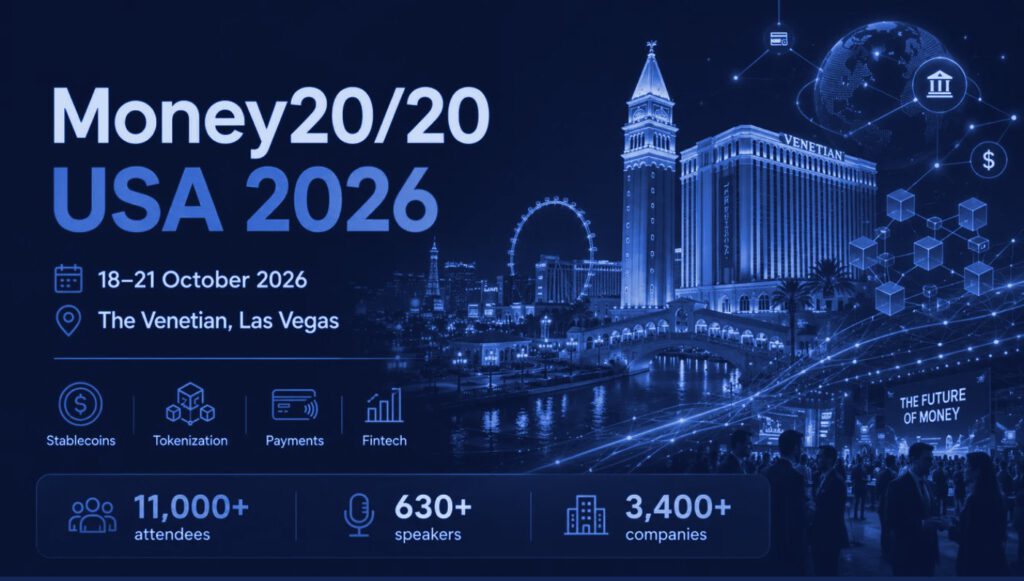
The payment world is meeting in Las Vegas again. From October 18 to 21, Money20/20 USA brings together the people shaping the future of banking, payments and fintech. Thousands of executives, founders, investors and technology leaders have descended on the city for four days of big ideas, ambitious announcements and, inevitably, a fair amount of networking.
The conference agenda is packed with discussions about agentic AI, stablecoins, tokenization and the next generation of payment infrastructure. Yet some of the most consequential conversations often take place elsewhere: in private hotel suites overlooking the Strip, at invitation-only dinners and over a drink at the bar. Because in payments, the technology may open the door, but relationships often determine what happens next.
Unfortunately, I cannot join the fintech crowd in Las Vegas in person this year. Still, following the published agenda and the conversations around the event, there are five developments I believe deserve attention.
1. Agentic AI: From assistance to action
Artificial intelligence is moving beyond chatbots, customer support and internal process automation. The focus is increasingly on AI agents that can research products, make recommendations and initiate transactions on behalf of customers.
This creates significant opportunities for banks, merchants and payment providers. It also raises fundamental questions about authorization, accountability and trust. The key question is no longer simply what AI can do. It is what customers will allow AI to do on their behalf, and which companies can make these interactions secure and seamless.
2. Stablecoins and tokenization: The plumbing of finance is changing
Beyond cryptocurrencies, financial institutions are exploring blockchain-based infrastructure for tokenized assets, faster settlement and new payment models. The opportunity is substantial, particularly in cross-border payments, treasury management and financial market infrastructure. The challenge is to connect new capabilities with existing systems in a way that is reliable, compliant and commercially viable.
The less glamorous side may ultimately be the most important: interoperability, liquidity, regulation and integration. The future of finance will not be built on technology alone. It will depend on whether the different pieces can actually work together.
3. Payments are becoming part of the customer experience
Payments are increasingly embedded in digital platforms, retail experiences and financial products. Real-time payments, digital wallets, embedded finance and AI-enabled commerce are changing where financial services create value.
The competitive question shifts. It is no longer just about processing a transaction at the lowest cost. It is about owning the right customer interaction, removing friction and delivering value at the moment it matters. The winners will be those who understand that payments are not merely a technical utility. They are an integral part of the customer relationship.
4. Trust and security: No shortcuts allowed
As financial services become more connected and automated, fraud prevention, digital identity, cybersecurity and regulatory compliance become even more important.
Agentic commerce illustrates the challenge well. If an AI agent initiates a payment, who authorized the transaction? Who is accountable if something goes wrong? How can customers retain control? These are not secondary compliance questions. They will directly influence adoption and customer confidence. Trust must be built into the architecture of new financial services from the beginning.
5. Strategic partnerships: Where the real leverage lies
No single company controls every capability required to deliver the next generation of financial services. The ability to identify the right partners, align commercial interests and turn collaboration into scalable business will increasingly separate market leaders from technology providers with limited reach.
And this is where the other side of Money20/20 comes into play. A conference session can introduce an idea. An exhibition meeting can identify a potential partner. But turning that initial contact into a strategic alliance requires trust, commercial alignment and sustained execution. Sometimes the next step happens in a meeting room. Sometimes it happens over dinner. And occasionally, it starts with a conversation at the bar that turns out to be more valuable than an entire day of scheduled meetings.
What does this mean for European fintech?
First, turn AI into measurable business value. Move beyond isolated pilots and identify customer journeys where intelligent automation can improve conversion, reduce costs or create new revenue.
Second, prepare for a more interconnected financial infrastructure. Instant payments, tokenized assets and stablecoin-based payment models will increasingly influence strategic decisions.
Third, make partnerships a core management discipline. Technology creates possibilities, but access to customers, complementary expertise, distribution and execution determine whether those possibilities become profitable businesses. In Europe, where market fragmentation and regulatory complexity are the norm, effective collaboration is an important competitive lever.
The bottom line: The best connections create the greatest opportunities
Money20/20 USA 2026 reinforces a broader shift in financial services. Technology is becoming more capable and accessible, but technology alone is a less sufficient source of differentiation. For executives, the question is not only which technology to invest in, but also which ecosystems to participate in and which partnerships to build.
Because in payments, technology moves money. The right relationships move business forward.
Sources and further reading
- Money20/20 USA, official event website
- Money20/20 USA, official 2026 agenda
- The Financial Revolutionist, AI payments and prediction markets headline Money20/20 USA
- Axios, AI shopping takes off as trust concerns linger
- Axios, Wall Street brings blockchain into the fold
- Mastercard, Money20/20 USA 2026
Editorial note: This article is an independent analysis based on published event information, the official agenda and external reporting. I did not attend Money20/20 USA 2026 in person. References to networking in hotel suites, at private events and at the bar describe the broader culture of major industry conferences, not independently verified deals from this year’s event.
Dieser Artikel enthält KI-generierte Inhalte. This article contains AI-generated content.